158/2022: St. Elizabeth of the Trinity (OCD), virgin
 |
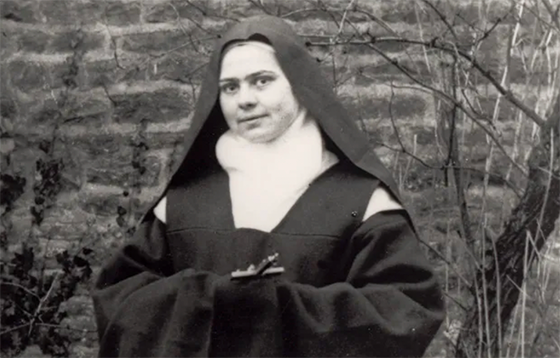
Elizabeth of the Trinity and St. Paul On November 8 the Carmelite Order celebrates the Memorial of St. Elizabeth of the Trinity. Elizabeth had been reading St. Paul more and more from the beginning of 1903, the time of her profession. Her former novice mistress, Sr. Marie of the Trinity, would say that, from that time on, Elizabeth grounded herself in two authors: John of the Cross and St. Paul. With regard to the former, Elizabeth had begun by dipping into John’s works, and it was only in 1902 that she started to read him with depth and thoroughness. It was a similar case with Sr Paul, who at first nourished her mind with occasional quotations like choice drops of water, until they fused into a continuous stream. Read more here about St. Elizabeth and St. Paul Read more about St. Elizabeth here + + + Isabel de la Trinidad y San Pablo El 8 de noviembre la Orden Carmelita celebra la memoria de Santa Isabel de la Trinidad. Isabel leía cada vez más a San Pablo desde principios de 1903, época de su profesión. Su antigua maestra de novicias, la Hna. Marie de la Trinidad, diría que, desde entonces, Isabel se inspiró en dos autores: Juan de la Cruz y San Pablo. Con respecto al primero, Isabel había empezado por fijarse en las obras de Juan, y no fue hasta 1902 cuando empezó a leerlo con profundidad y minuciosidad. Algo parecido ocurrió con San Pablo, que al principio alimentó su mente con citas ocasionales, como gotas de agua escogidas, hasta que se fundieron en una corriente continua. Lea más aquí sobre Santa Isabel y San Pablo Lea más aquí sobre Santa Isabel + + + Elisabetta della Trinità e San Paolo L'8 novembre l'Ordine Carmelitano celebra la memoria di Santa Elisabetta della Trinità. Elisabetta leggeva sempre più spesso San Paolo dall'inizio del 1903, epoca della sua professione. La sua prima maestra delle novizie, Sr. Marie della Trinità, dirà che, da quel momento in poi, Elisabetta si è rifugiata in due autori: Giovanni della Croce e San Paolo. Per quanto riguarda il primo, Elisabetta aveva iniziato immergendosi nelle opere di Giovanni, e solo nel 1902 iniziò a leggerlo con profondità e completezza. Un caso simile si verificò con San Paolo, che all'inizio alimentò la sua mente con citazioni occasionali, come gocce d'acqua scelte, finché non si fusero in un flusso continuo. Per saperne di più su S. Elisabetta e S. Paolo, leggi qui Per saperne di più su Santa Elisabetta, leggi qui + + +
www.ocarm.org
|
 |


- This mailing list is a public mailing list - anyone may join or leave, at any time.
-
This mailing list is announce-only.
CITOC Online is the e-Newsletter published by the Order of Carmelites. Submitted news, information, feature, articles, letters, photos, and other materials become the property of the Citoc Online
CITOC Online es el e-BoletÃn publicado por la Orden de los Carmelitas. Las noticias, información, artÃculos, cartas, fotografÃas y otros materiales envÃados, se convierten en propiedad de la Revista de CITOC.
“CITOC Online†è l’e-Newsletter pubblicato dell’Ordine dei Carmelitani. Le notizie, informazioni, articoli, lettere, fotografie e altri materiali offerti alla rivista diventano sua proprietà ..
Privacy Policy:
- Your email address will never be shared with any 3rd parties and you will receive only the type of content for which you signed up.
CITOC Online can be shared among friends, family and relatives for religious purpose without changing its content.
Il tuo indirizzo email non sarà mai condivise con terze parti e riceverai solo il tipo di contenuto per il quale ti sei iscritto.
- CITOC online puo essere condivisi tra amici, familiari e parenti per scopi religiosi, senza alterarne il contenuto.