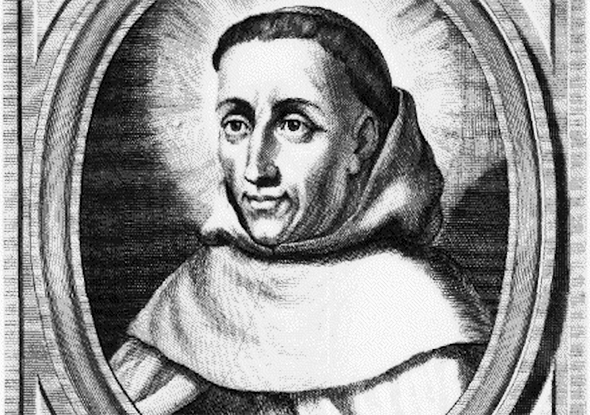
| | Blessed John Soreth, priest
July 24 | Memorial John Soreth and the Carmelite Nuns Important to the life of the Carmelite Order was the foundation of female monasteries by Blessed John Soreth. As soon as he was elected prior general on November 1, 1451, Soreth himself affiliated the beguinage of Ten Elsen near Geldern in 1452, confirming it the following year by appealing to the papal bull Cum nulla (October 7, 1452), with which Pope Nicholas V recognized the Carmelites' right to have female monasteries like other mendicant orders. Soreth used the bull to found monasteries in Flanders, Germany, and Britain, in which he wanted cloistered life from the outset. After the Beguines of Ten Elsen, Soreth incorporated the sisters of Nieukerk (1455), and at the same time the community of Dinant was founded, followed by Liège (1457) and Bondon in Brittany, where in 1468 the Duchess Françoise d'Amboise entered. In 1466, Harlem and Huy were founded, followed by Namur in 1468 and Vilvoorde in 1469.(Giovanni Soreth, by Giovanni Grosso, O. Carm. in Dizionario Carmelitano) Read more + + + B. Juan Soreth, sacerdote
24 Julio | Memoria obligatoria Juan Soreth y las monjas carmelitas La fundación de monasterios femeninos por parte de Juan Soreth fue importante para la vida de la Orden Carmelita. Tan pronto como fue elegido prior general el 1 de noviembre de 1451, el propio Soreth afilió el beguinaje de Ten Elsen, cerca de Geldern, en 1452, confirmándolo al año siguiente mediante la bula papal Cum nulla (7 de octubre de 1452), con la que el papa Nicolás V reconoció a los carmelitas el derecho a tener monasterios femeninos como otras órdenes mendicantes. Soreth utilizó la bula para fundar monasterios en Flandes, Alemania y Gran Bretaña, en los que quería que se viviera la vida claustral desde el principio. Después de las beguinas de Ten Elsen, Soreth incorporó a las hermanas de Nieukerk (1455) y, al mismo tiempo, se fundó la comunidad de Dinant, seguida de la de Lieja (1457) y la de Bondon en Bretaña, donde en 1468 ingresó la duquesa Françoise d'Amboise. En 1466 se fundaron Ámsterdam y Huy, seguidas de Namur en 1468 y Vilvoorde en 1469. (Giovanni Soreth, by Giovanni Grosso, O. Carm. in Dizionario Carmelitano) Leer más + + + B. Giovanni Soreth, sacerdote
24 Luglio | Memoria Giovanni Soreth e le monache carmelitane La fondazione dei monasteri femminili da parte di Soreth fu importante per la vita dell'Ordine Carmelitano. Appena eletto priore generale il 1° novembre 1451, Soreth stesso affiliò il beghinaggio di Ten Elsen vicino a Geldern nel 1452, confermandolo l'anno dopo con la bolla papale Cum nulla (7 ottobre 1452), con la quale papa Niccolò V riconobbe alle carmelitane il diritto di avere monasteri femminili come gli altri ordini mendicanti. Soreth usò la bolla per fondare monasteri nelle Fiandre, in Germania e in Gran Bretagna, nei quali voleva fin dall'inizio una vita claustrale. Dopo le beghine di Ten Elsen, Soreth incorporò le sorelle di Nieukerk (1455) e, contemporaneamente, fu fondata la comunità di Dinant, seguita da quella di Liegi (1457) e di Bon Don in Bretagna, dove nel 1468 entrò la duchessa Françoise d'Amboise. Nel 1466 furono fondate Harlem e Huy, seguite da Namur nel 1468 e Vilvoorde nel 1469. (Giovanni Soreth, da Giovanni Grosso, O. Carm. in Dizionario Carmelitano) Leggi di più |